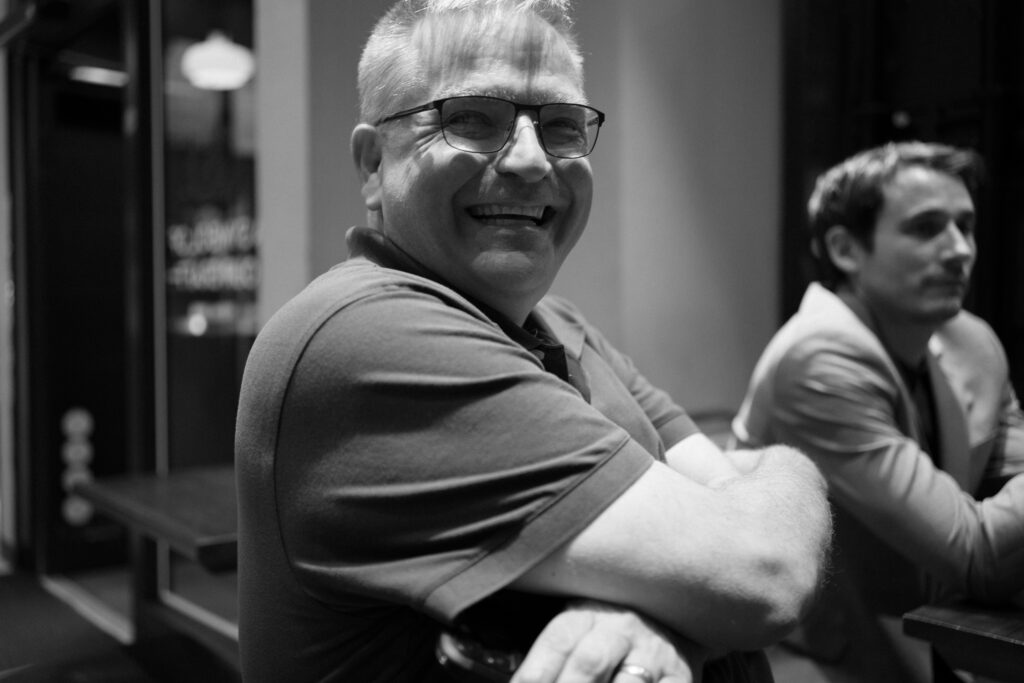
Vint Cerf – Early Explorations in XR Library Thinking
Vint Cerf discussed his long-standing interest in three-dimensional information spaces, dating back nearly 40 years.
He shared his early attempt in the mid-to-late 1980s to create virtual library environments where people could meet in virtual rooms surrounded by materials relevant to their discussions—a concept ahead of its technological time but now quite feasible. He referenced historical precedents like the ancient memory house technique (associating information with physical spaces) and MIT’s 1970s Spatial Database Management System, which let users navigate 3D space with information “whispering” from virtual filing cabinets as they approached. Cerf highlighted augmented reality developments, particularly Google Glass, which despite initial public resistance (“glassholes”), found successful applications in surgical training where multiple people can share a surgeon’s field of view. He sees these AR technologies as having potential if they can be made comfortable for extended use. Looking forward, he discussed how AI agents and large language models could operate within augmented reality spaces, retrieving and analyzing information. He referenced David Brin’s science fiction novel “The Kiln People” as a thought-provoking exploration of creating autonomous copies of oneself to perform parallel tasks.
During the Q&A, participants raised questions about physical-virtual space integration, whether these technologies truly enhance thinking and language production, agent ownership and rights, and the need for what one participant called “virtual urbanism”—creating meaningful navigation through information rather than just jumping between points.
Tess Rafferty – Augmented Creativity: The Future of Writing in XR
Tess Rafferty, a comedy writer and performer, explores how XR technologies might enhance creative writing processes, particularly for comedy and storytelling.
She describes experiments with spatial writing tools where jokes, story elements, and character developments can be arranged in three-dimensional space, allowing writers to see connections and patterns more intuitively than in linear documents. Rafferty envisions XR environments where writers can physically walk through their story structures, manipulate narrative elements spatially, and collaborate with others in shared virtual spaces. She emphasizes that while traditional writing tools constrain thinking to linear sequences, spatial interfaces could unlock new creative approaches by allowing writers to organize and reorganize content in ways that match natural thought patterns.
Alan Kay – Surprise Guest
Alan Kay discusses fundamental principles of human-computer interaction and the unrealized potential of personal computing.
He emphasizes that computers should be dynamic mediums that amplify human capabilities rather than simply digitizing existing practices. Kay critiques how most current software merely replicates paper-based workflows rather than exploiting computational possibilities, and argues that true innovation requires thinking about what computers can do that was previously impossible. He discusses the importance of building systems that support exploration and learning, referencing his work on Smalltalk and the Dynabook concept. Kay stresses that interface design should prioritize helping humans think better rather than simply making tasks more efficient, and that we’ve barely scratched the surface of what’s possible when computers are used as tools for intellectual augmentation.
Keith Martin – Working in XR
Keith Martin presents practical experiences and challenges of conducting knowledge work entirely in XR environments, including how his experience as magazine and book designer suggests to him that grids for layouts can be useful in XR if done flexibly.
He describes daily workflows using virtual desktop environments, spatial organization of windows and documents, and the physical and cognitive demands of extended XR sessions. Martin discusses the current limitations of XR for text-intensive work, including resolution constraints, eye strain, and the weight of headsets, while also highlighting benefits like unlimited virtual screen space and the ability to create persistent spatial arrangements of work materials. He explores how spatial memory and physical movement through virtual environments can enhance information retention and workflow organization, drawing parallels to memory palace techniques. Martin emphasizes that while current technology has significant limitations, the fundamental approach of organizing digital work spatially shows promise for future development.
Dave Millard – After Documents
Dave Millard examines the fundamental nature of documents and proposes that we’re moving toward a post-document era where information exists in more fluid, composable forms.
He argues that traditional documents bundle content, structure, and presentation in ways that made sense for physical media but unnecessarily constrain digital information. Millard advocates for separating these concerns, allowing the same content to be automatically restructured and reformatted for different contexts, devices, and purposes. He discusses how AI and computational approaches can dynamically assemble personalized “views” of information rather than requiring everyone to consume identical document artifacts. Millard suggests that future information systems will treat documents as temporary assemblies of content elements rather than fixed objects, enabling more flexible reuse, adaptation, and personalization while maintaining appropriate attribution and provenance.
Bob Stein – Tapestry of Knowledge
Bob Stein presents his vision for collaborative knowledge building through what he calls a “tapestry” approach, where knowledge emerges from interconnected contributions rather than isolated documents.
He critiques traditional publishing models that treat texts as finished, authoritative objects and proposes systems where readers can add annotations, alternative perspectives, and connections that become part of the evolving knowledge structure. Stein describes experiments with social reading platforms where communities collaboratively interpret and expand upon texts, creating rich layers of commentary and cross-references. He envisions knowledge as inherently social and conversational rather than declarative, with systems designed to preserve and surface multiple viewpoints and ongoing discussions rather than presenting single authoritative versions. Stein emphasizes the importance of designing for constructive dialogue and preventing harmful contributions while maintaining openness to diverse perspectives.
Alessio Antonini – Authoring for AI
Alessio Antonini explores how content creation must evolve when AI systems become major consumers of human-authored content.
He discusses the challenges of ensuring AI systems properly understand context, attribution, and authorial intent when processing texts, and proposes enhanced markup and metadata schemes that make content more interpretable by machines while remaining accessible to humans. Antonini examines how current AI training on web content often strips away important contextual information and attribution, leading to systems that reproduce content without proper acknowledgment or understanding of nuance. He advocates for authoring practices and tools that embed richer semantic information, provenance data, and usage rights directly in content, enabling AI systems to be better informed consumers while protecting creator interests. Antonini emphasizes the need for standards and practices that serve both human readers and AI systems without creating additional burden for authors.
Paul Smart & Rob Clowes – Building AGI One Word at a Time
Paul Smart (with collaborator Rob Clowes who is not present) examine the relationship between language, text, and artificial general intelligence, arguing that sophisticated language use is both a window into intelligence and a component of building AGI systems.
He discusses how large language models demonstrate emergent capabilities that weren’t explicitly programmed, suggesting that statistical patterns in text may encode deeper cognitive structures. Paul explore philosophical questions about whether language competence constitutes genuine understanding or merely sophisticated pattern matching, and consider how text-based interactions might help develop or evaluate AGI systems. He proposes that the iterative refinement of language models through interaction with human-generated text represents a form of “building intelligence one word at a time,” though he acknowledges ongoing debates about whether this approach can achieve true general intelligence or will always lack some essential component of human-like understanding.
Ken Perlin – Future Glasses and Future Text
Ken Perlin presents his vision for future augmented reality interfaces where text and information seamlessly blend with the physical world through lightweight AR glasses.
He describes scenarios where text appears contextually relevant to objects and locations, providing information exactly when and where needed without requiring users to explicitly query systems. Perlin discusses technical challenges including display technology, power consumption, and social acceptance of ubiquitous AR, while proposing interaction paradigms that move beyond smartphone-style interfaces toward more natural, gesture-based and context-aware systems. He envisions text that adapts to user attention and context, appearing in peripheral vision when relevant but not demanding focus, and explores how spatial text placement and typography can convey meaning beyond the words themselves. Perlin emphasizes that successful AR text interfaces must be socially acceptable, minimally intrusive, and genuinely useful rather than gimmicky, requiring careful consideration of when augmentation enhances rather than distracts from real-world experience.